Pigeon Key: The Isolated Engineering Camp Frozen in Time
A Five-Acre Wonder Beneath the Seven Mile Bridge
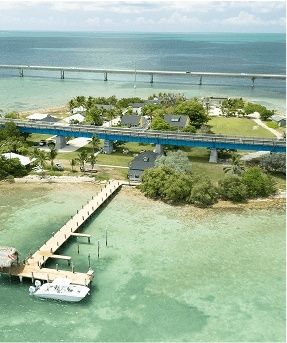
Seen from the Overseas Highway, Pigeon Key can look almost too small to matter. The low coral island sits beneath the long sweep of the Old Seven Mile Bridge, surrounded by bright water and open sky. Yet this five-acre outcrop contains one of the Florida Keys’ most remarkable historical landscapes, a compact settlement shaped by the demands of building Henry Flagler’s railroad across open ocean.
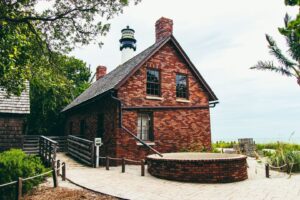
Beyond the postcard view is a surviving work camp with cottages, service buildings, waterfront spaces, and traces of the daily systems that once supported hundreds of laborers. Pigeon Key is not simply a scenic stop. It is a rare engineering monument, a place where the scale of Flagler’s ambition becomes easier to understand through the close quarters, harsh conditions, and practical ingenuity preserved on the island. The historic buildings are federally recognized as the Pigeon Key Historic District, giving visitors important context for what might otherwise appear to be a quiet cluster of weathered wooden structures.
The Harrowing Rise of Flagler’s Open-Ocean Work Camp
Construction of the Florida East Coast Railway’s Key West Extension began in 1905. The project eventually stretched roughly 160 miles from the mainland to Key West, with approximately 128 miles crossing open water. At a time when heavy equipment, communications, and construction logistics were far less advanced than today, the undertaking demanded extraordinary coordination. Bridges, embankments, channels, and rail beds had to be built in a marine environment exposed to wind, waves, salt, and tropical weather.
Pigeon Key became one of the principal bases for that work. More than 400 laborers lived on or around the island during the most intensive phases of construction. The settlement functioned as a small industrial town rather than a simple workers’ camp. Its facilities included a commissary, mess halls, a hospital, and a post office, all necessary for maintaining a large population far from the mainland.
Life there was governed by practical difficulties that modern visitors can easily underestimate. Mosquitoes were persistent, fresh water was limited, and essential supplies had to arrive by schooner. Food, drinking water, construction materials, medicine, and replacement equipment all depended on marine transport. Tropical storms could interrupt deliveries and damage unfinished work, while heat and humidity made long shifts even more demanding. The railroad was completed in 1912 after intensive, round-the-clock labor, earning the project a reputation as one of the great engineering achievements of its age.
- Workforce: More than 400 laborers were associated with the Pigeon Key camp during construction.
- Services: The island supported a commissary, mess halls, hospital, and post office.
- Supply challenge: Fresh water and other necessities arrived by schooner.
- Engineering setting: Much of the railway crossed open ocean between the mainland and Key West.
The cottages and other surviving structures make the story tangible. Their modest scale reveals how closely workers, supervisors, and support staff lived beside the construction zone. Preservation is especially meaningful in the Keys, where hurricanes, salt air, redevelopment, and changing transportation routes have erased many traces of earlier infrastructure. Pigeon Key’s historic district status protects an unusually coherent collection of buildings and helps preserve the island as a cultural landscape rather than a collection of unrelated artifacts.
Surviving the Storms and Reinventing an Outpost
The railway operated for 23 years, but its future changed dramatically during the catastrophic Labor Day Hurricane of 1935. The storm severely damaged the railroad route and demonstrated the vulnerability of the immense coastal system. Rather than rebuild the railway, Florida converted much of its structure into the Overseas Highway, which opened in 1938. The transformation allowed the old transportation corridor to serve automobiles and connected the Keys through a new era of road travel.
Pigeon Key continued to adapt. It became a maintenance base for bridge tenders and road crews, and its role expanded during later periods of emergency response and military activity. The island was associated with rescue and relief operations after the 1935 hurricane, while later decades brought additional transportation and security uses. Hurricane Donna destroyed two buildings, and the newer Seven Mile Bridge eventually bypassed the island, but the core historic settlement remained. Restored structures now serve as museum spaces, classrooms, bunkhouses, and reminders of the changing relationship between the Keys and the sea.
Preserving these buildings in a shifting marine environment is a continuing challenge. Salt air corrodes hardware, intense sunlight weakens finishes, and storms can threaten roofs, foundations, docks, and access routes. The island’s classic turn-of-the-century vernacular architecture therefore represents more than an attractive visual style. It reflects an ongoing conservation effort, one that must respect historic materials while adapting buildings for education and public access.
From Industrial Depot to Off-Grid Marine Laboratory
Today, the Pigeon Key Foundation has given the island a second working life. The site remains focused on history, but it also operates as an education and marine science center. Guided historical tours connect the buildings to Flagler’s railroad, while hands-on programs introduce students and visitors to the shallow-water habitats, reef communities, and wildlife of the Florida Keys.
The educational model is active rather than purely interpretive. Coordinators and field interns work with school groups, summer campers, and visiting families, using the island’s shoreline and surrounding waters as an outdoor classroom. Programs can explore reef ecology, conservation, animal behavior, and shark biology. The foundation’s 2026 education-season interns bring backgrounds in marine science, environmental studies, wildlife conservation, biology, and environmental education, adding current academic perspectives to a historic setting.
That combination gives Pigeon Key unusual range. A visitor may begin with a story about railroad grades and bridge construction, then move into a discussion of sea turtles, rays, sharks, water quality, or the importance of protecting marine habitat. For children, the appeal lies in learning beside the water rather than inside a conventional classroom. For adults, the experience provides a useful reminder that the Keys’ cultural history and ecological future are inseparable.
- History programs: Guided tours explain the railroad camp, bridge construction, and later uses of the island.
- Marine science: Activities introduce reef ecology, wildlife, conservation, and shark biology.
- Field learning: Students can study the coastal environment through direct observation and outdoor activities.
- Extended programs: The foundation offers educational field trips, including three-day, two-night experiences for groups.
Pigeon Key also operates with an off-grid mindset that suits its isolated setting. Self-contained solar power and water-conservation practices reduce dependence on mainland utilities and make the island a practical demonstration of resource awareness. Limited water, energy, and storage capacity are not abstract environmental topics here. They are daily operational realities, much as they were when schooners delivered fresh water to the original work camp.
Essential Logistics for Planning Your 2026 Island Excursion
A visit is easiest to plan as a half-day stop from Marathon. Access is available by walking or bicycling across the restored Old Seven Mile Bridge, or by using the dedicated tram service associated with the island experience. The historic bridge path reopened to pedestrians and bicyclists on January 15, 2022, restoring the connection between Marathon and Pigeon Key after years of repair work. The crossing itself is part of the attraction, with broad views of shallow turquoise water and the modern highway route nearby.
Visitors choosing the tram should reserve ahead when possible and confirm current availability, check-in instructions, and operating details directly with the Pigeon Key Foundation. Those walking or cycling should also verify access conditions before setting out, especially during periods of extreme heat, storm activity, maintenance, or special events. The bridge is exposed, with little relief from sun and wind, so an early start is often more comfortable than arriving during the strongest midday heat.
Pack for an outdoor marine site rather than a conventional museum. Bring drinking water, a hat, reef-safe sunscreen, a towel, sturdy sandals or water shoes, and snorkeling equipment if water conditions and site guidance permit. Picnickers should plan for pack-in, pack-out habits and avoid leaving food waste or single-use items behind. A camera is worthwhile, but visitors should give equal attention to the historic buildings, bridge construction details, shoreline habitats, and changing light across the water.
| Access mode | Best suited to | What to plan for |
|---|---|---|
| Tram | Visitors seeking a straightforward, organized arrival | Reserve in advance and confirm current check-in and operating information |
| Walking | Travelers who want the full bridge experience | Allow time for heat, sun, wind, and the exposed crossing |
| Bicycling | Active road-trippers and cyclists | Use suitable equipment, carry water, and verify bridge access conditions |
Regional tourism planning also influences how access, preservation, and visitor services develop around Marathon and the Middle Keys. County advisory materials address tourism budgets, visitor information services, project agreements, destination marketing, and related infrastructure planning. These Monroe County tourism records offer a useful glimpse into the public planning behind visitor facilities and historic-site support, although they should not be treated as a substitute for checking the attraction’s current visitor information.
For the smoothest outing, allow roughly three hours to half a day, depending on whether the itinerary includes a guided tour, swimming, snorkeling, photography, or an unhurried picnic. Weather deserves special attention. The bridge and island offer little shelter from strong sun, wind, or passing storms, and marine activities may be limited by conditions. A live view of the island can help with a last-minute sense of weather and water conditions, but current access information should come from the operating organization before departure.
Step Into the Living Heritage of the Florida Keys
Pigeon Key’s strength is its dual identity. It is an industrial monument built around one of America’s boldest transportation projects, yet it is also an ecological classroom focused on the future of the surrounding sea. The cottages recall laborers, bridge tenders, and families who made an isolated work camp function. The marine programs show why the island still matters in a region where coral habitats, clear water, and coastal wildlife require careful stewardship.
An afternoon here offers more than a scenic detour from US-1. It brings the physical demands of open-ocean engineering into view, then places those achievements within the fragile environment that surrounds them. Reserve tram access when available, or plan a weather-aware walk or bicycle ride across the Old Seven Mile Bridge. With sensible sun protection, adequate water, and respect for the island’s historic and marine resources, Pigeon Key becomes one of the Florida Keys’ most memorable meaningful stops.